
Chicago: A City Built of Light, Steel, and Stories
A photographic journey through the icons that shape the Windy City
Chicago is a city that gets under your skin in the best possible way. It’s bold, architectural, unapologetically gritty, and endlessly photogenic. During my week exploring the city, I found myself surrounded by structures that weren’t just tall — they were symbolic. Monuments to reinvention, engineering experiments, and reminders that Chicago continues to shape the skyline of America.
This post brings together my entire photo series from that trip: the buildings, the river, the waterfront, the history, and the small moments tucked between the skyscrapers. Each location carries its own story. Each photo became a reminder that Chicago is never just a backdrop — it’s a character.
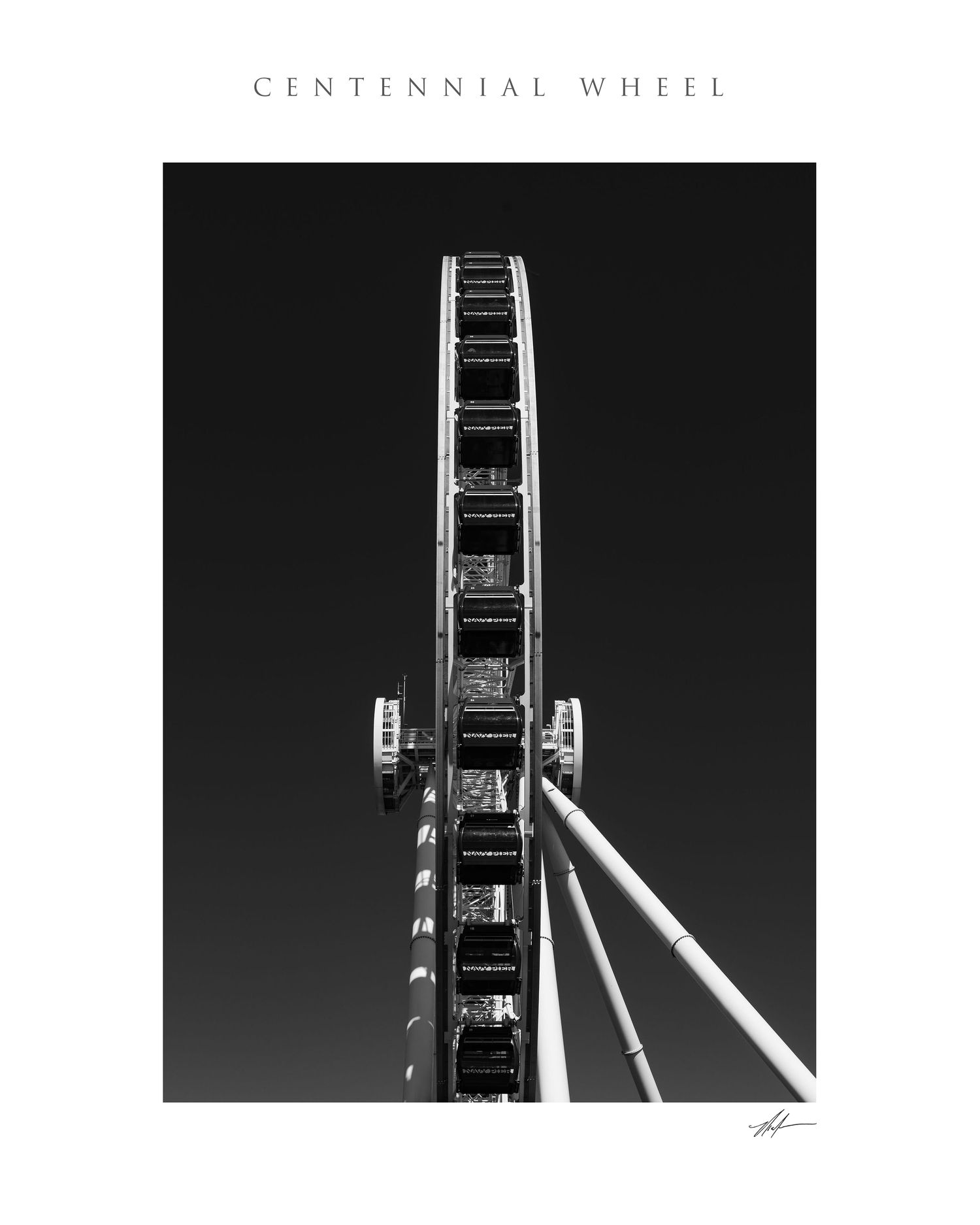
Centennial Wheel at Navy Pier
Rising nearly 200 feet above Lake Michigan, the Centennial Wheel is a modern spin on Chicago’s legacy — the Ferris wheel was born here in 1893. Rebuilt in 2016, the current wheel offers year-round views from climate-controlled gondolas. Navy Pier itself, opened in 1916, has shifted from shipping hub to one of Chicago’s most visited destinations, glowing with food, art, music, and fireworks over the lake. Chicago, you’re stunning from every angle.
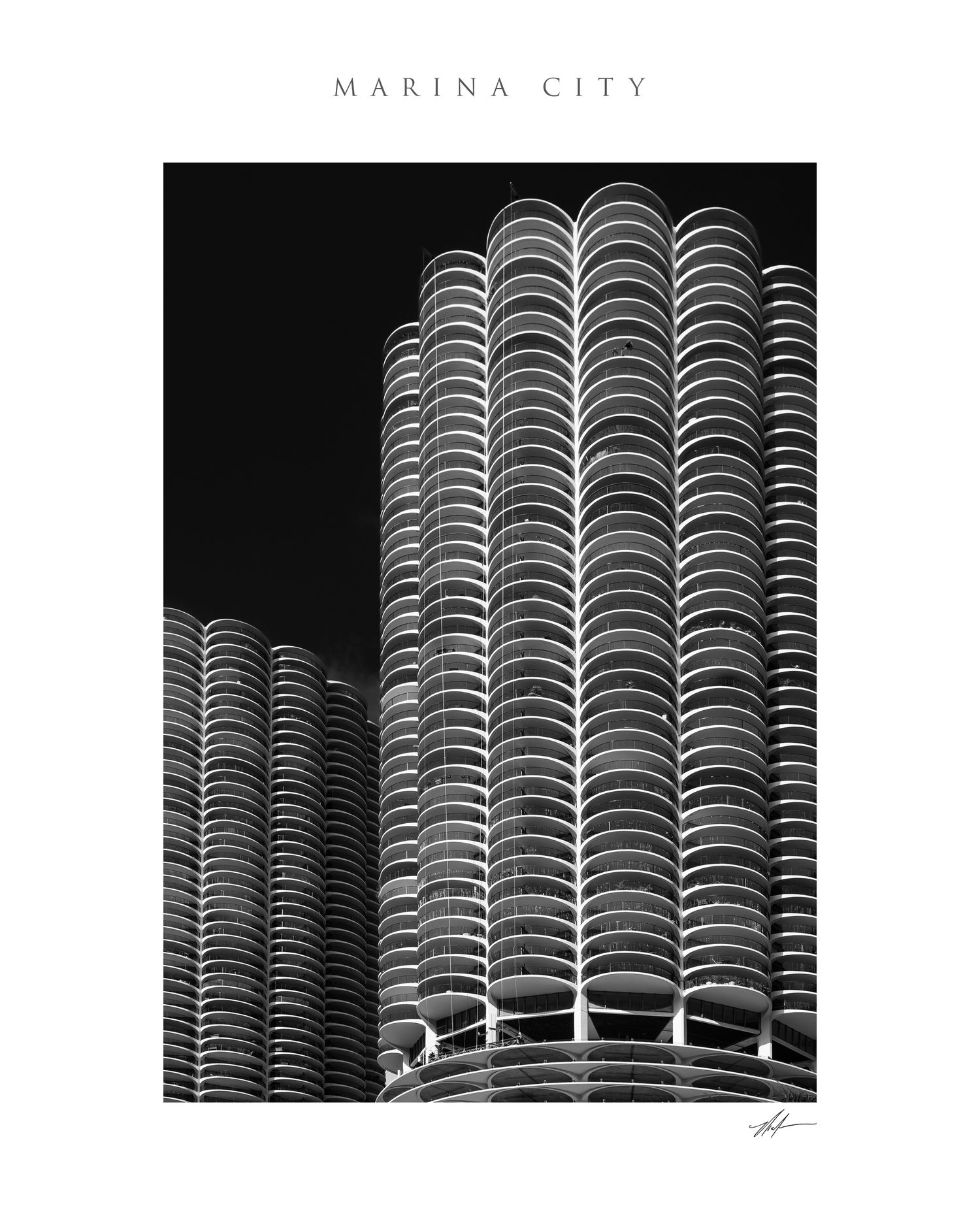
Marina City
Few buildings define Chicago’s skyline the way the twin “corn cob” towers of Marina City do. Designed by Bertrand Goldberg and completed in 1964, they were a revolutionary experiment in vertical living — a “city within a city.” Apartments, offices, a theater, parking spirals, and even a riverfront marina. Their futuristic form has appeared in films, TV shows, and even on Wilco’s album “Yankee Hotel Foxtrot.” Chicago builds icons that never fade.
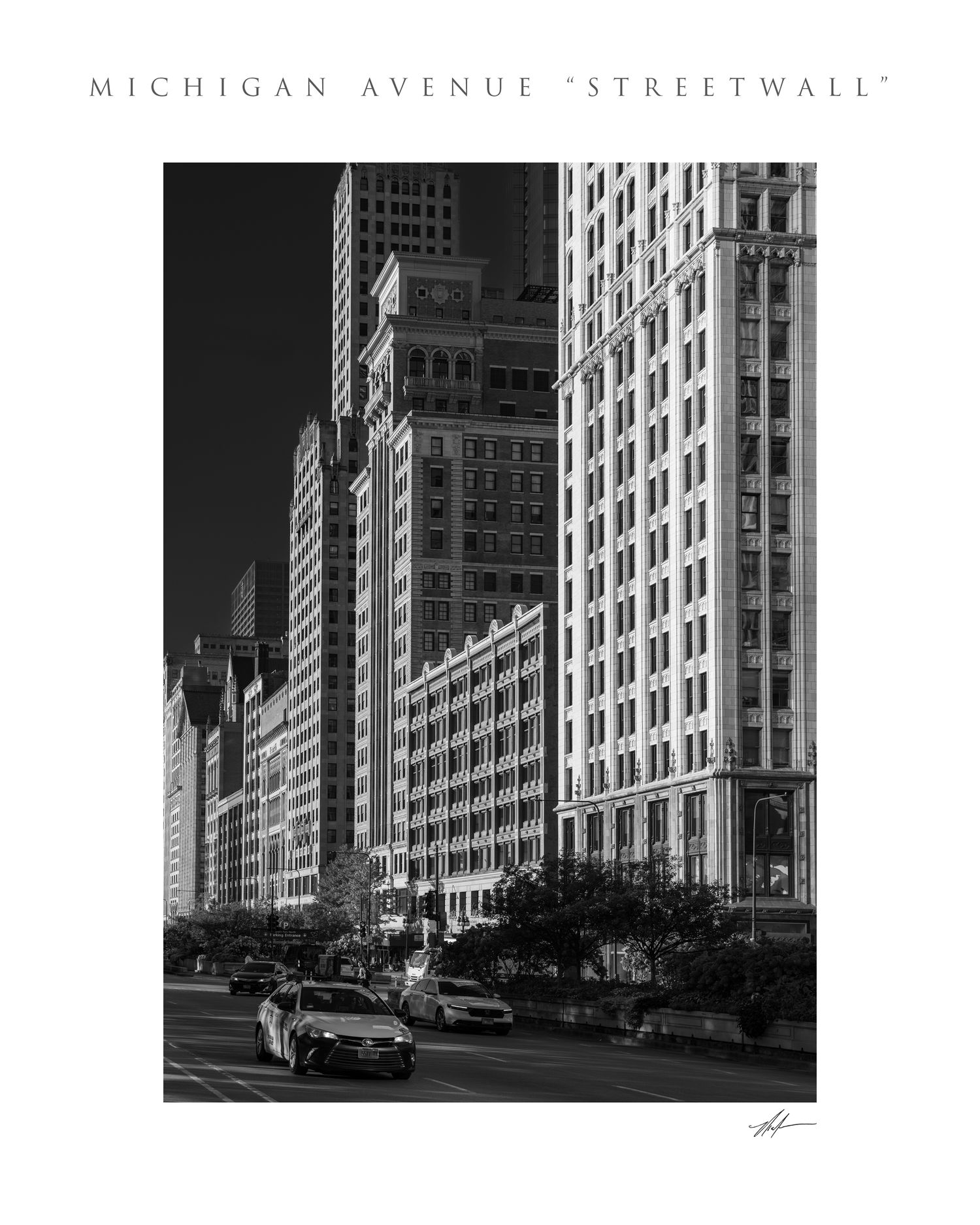
Michigan Avenue “Streetwall”
Walking along Michigan Avenue, facing Grant Park and Millennium Park, feels like drifting through an open-air architectural museum. This stretch — the Michigan Boulevard Historic District — showcases early 20th-century façades in Beaux-Arts, Chicago School, and early Art Deco styles. A skyline of elegance that survived the Great Fire and shaped the city that rose from the ashes. Every building feels like a chapter in a massive living history book.
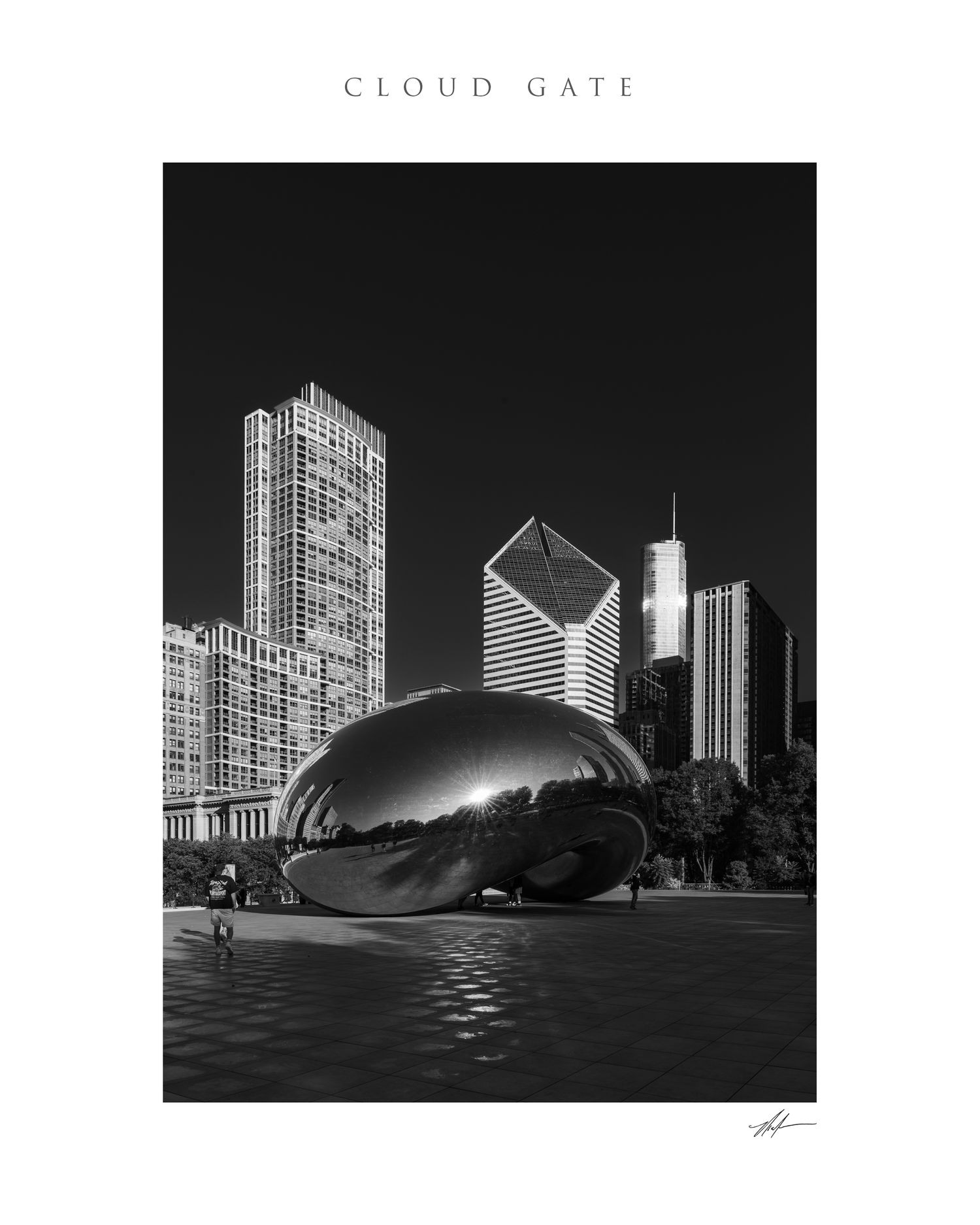
Cloud Gate (“The Bean”)
Cloud Gate is more than a sculpture — it’s an engineering marvel. Weighing 110 tons and constructed from 168 seamless stainless steel plates, it reflects the city in a perfect, fluid mirror. Beneath that polished surface sits a sophisticated internal steel truss structure. For me, this landmark is personal: its internal framework was built by the same Northern California metal fabricators I once worked with as a project engineer. Some landmarks feel universal. This one also feels like home.
St. Regis Chicago
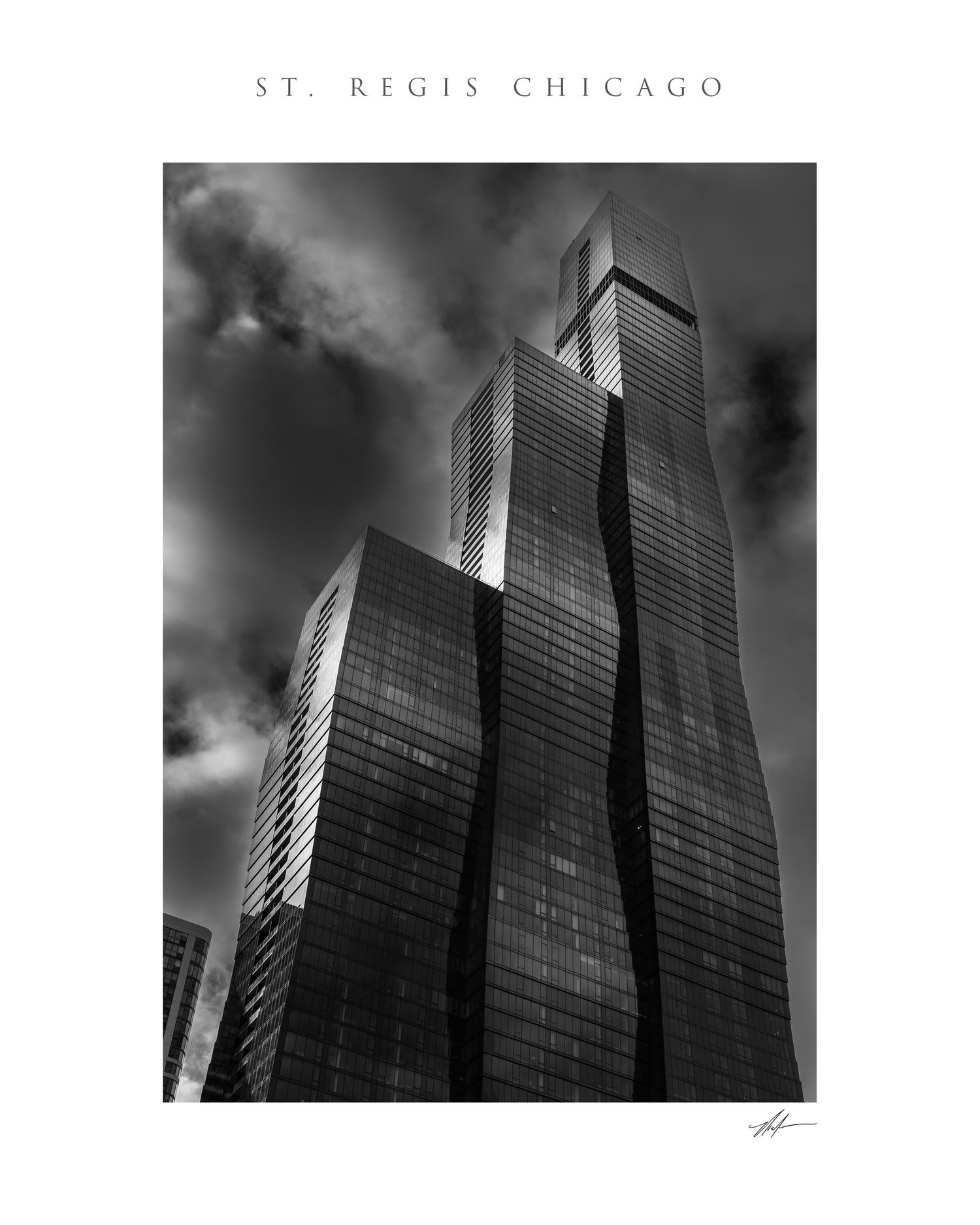
Completed in 2020, the St. Regis Chicago rises 1,198 feet, making it the tallest building in the world designed by a woman — Jeanne Gang. Its triple-tower silhouette shifts as it ascends, wrapped in over 775,000 square feet of blue-green glass inspired by the lake and sky. Advanced engineering systems counter Chicago winds, while luxury residences and the St. Regis Hotel fill the interior. A shimmering example of Chicago’s architectural future.
Lake Point Tower
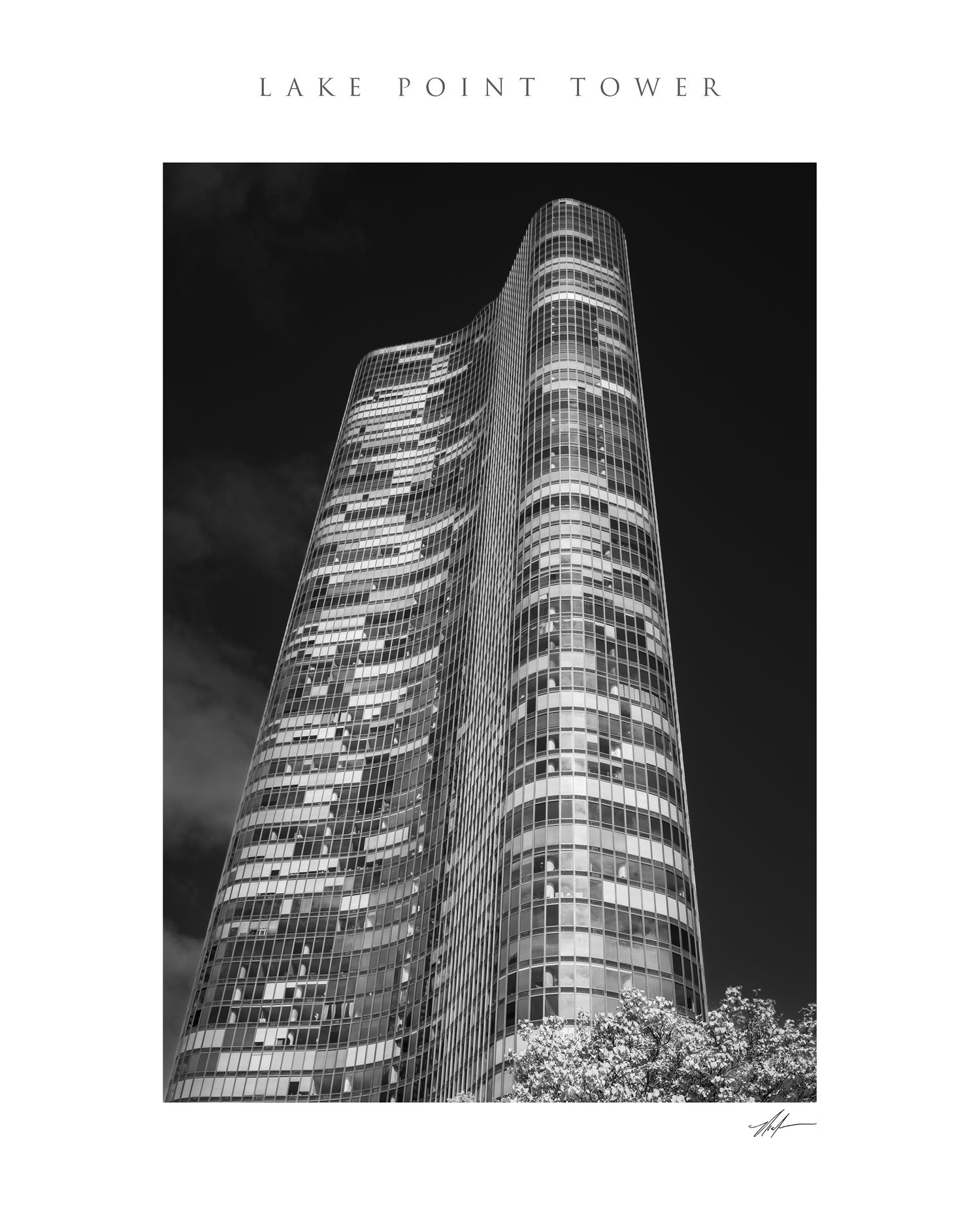
Standing 645 feet tall and completed in 1968, Lake Point Tower remains the only major private building east of Lake Shore Drive. Its curved, three-winged design was created by students of Mies van der Rohe to maximize views and natural light. Above its podium sits a secret oasis: a 2.5-acre private park with a lagoon, pathways, and lush gardens. A quiet masterpiece perched at the edge of Lake Michigan.
Aon Center
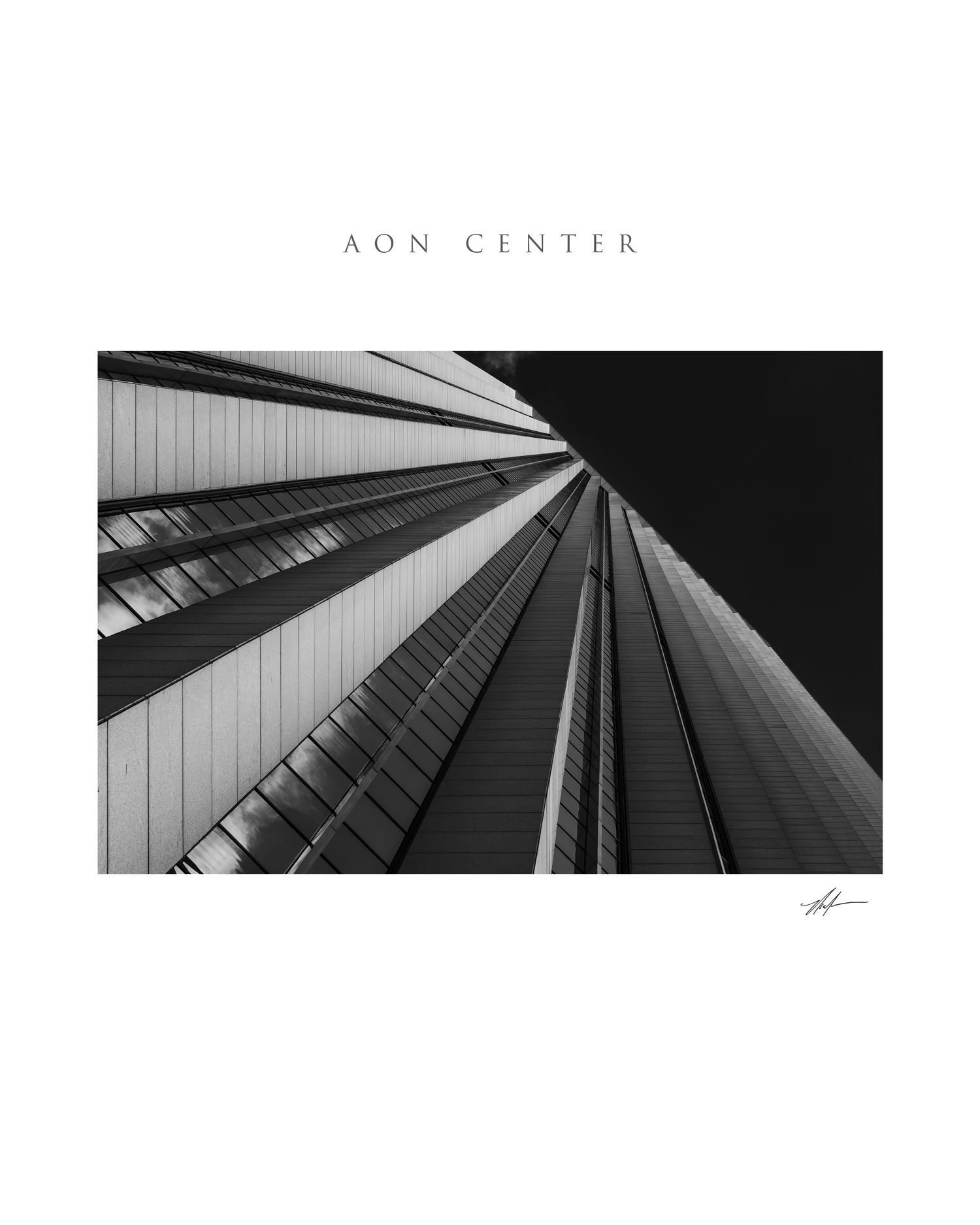
Originally clad in delicate Italian Carrara marble, the 1,136-foot Aon Center faced unexpected structural issues that led to a full recladding in granite in the early 1990s. Its modernist form and clean vertical lines make it one of Chicago’s most distinct skyscrapers. Proof that architecture evolves just like the city around it.
Trump International Hotel & Tower
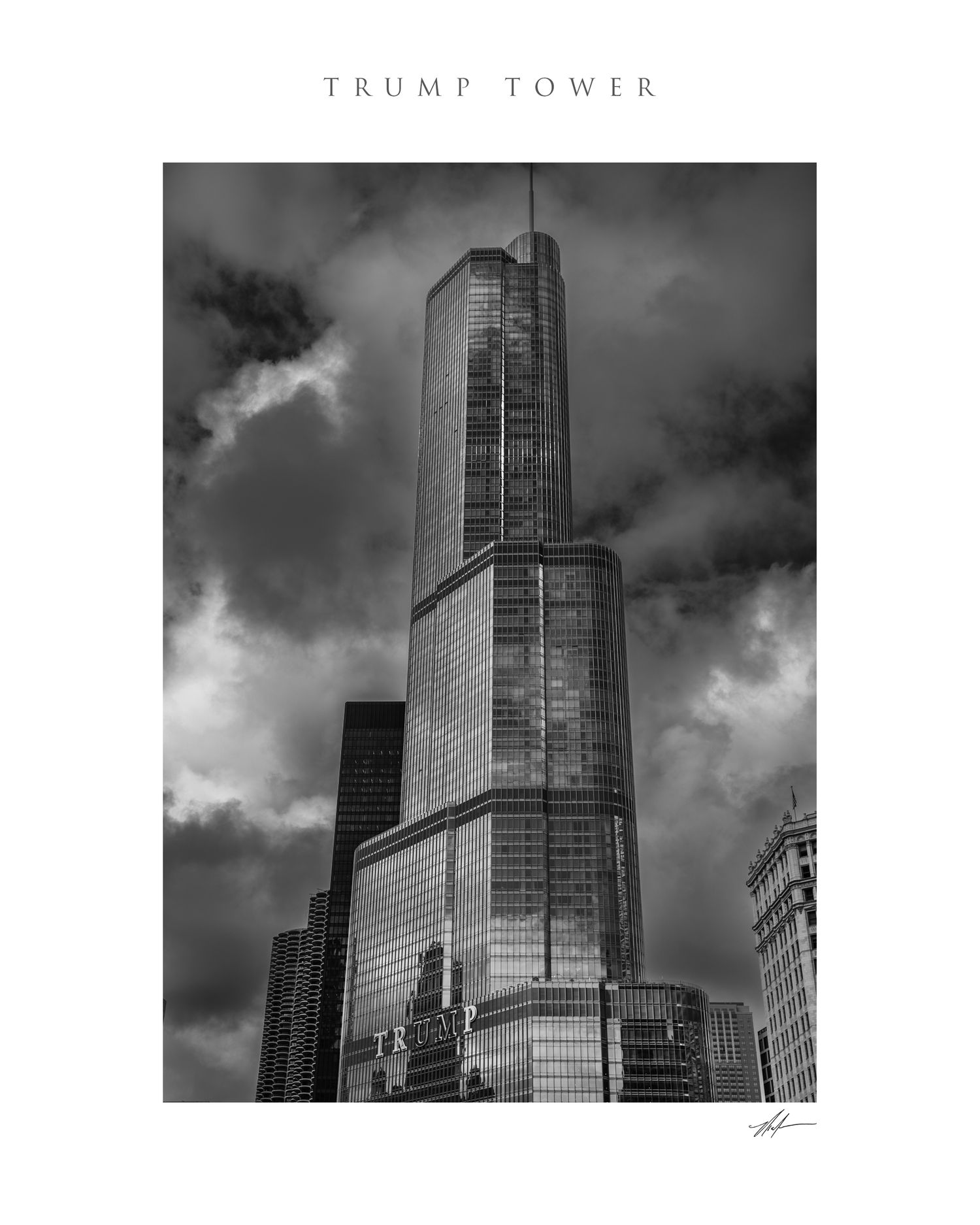
Soaring 1,389 feet, Trump's Chicago tower is a feat of glass, steel, and engineering. Designed by Adrian Smith (of SOM), it uses three setbacks aligned with nearby icons and rests on a foundation poured in a massive overnight “Big Pour” that used 5,000 cubic yards of concrete. Love it or hate it, this building changed the riverfront skyline.
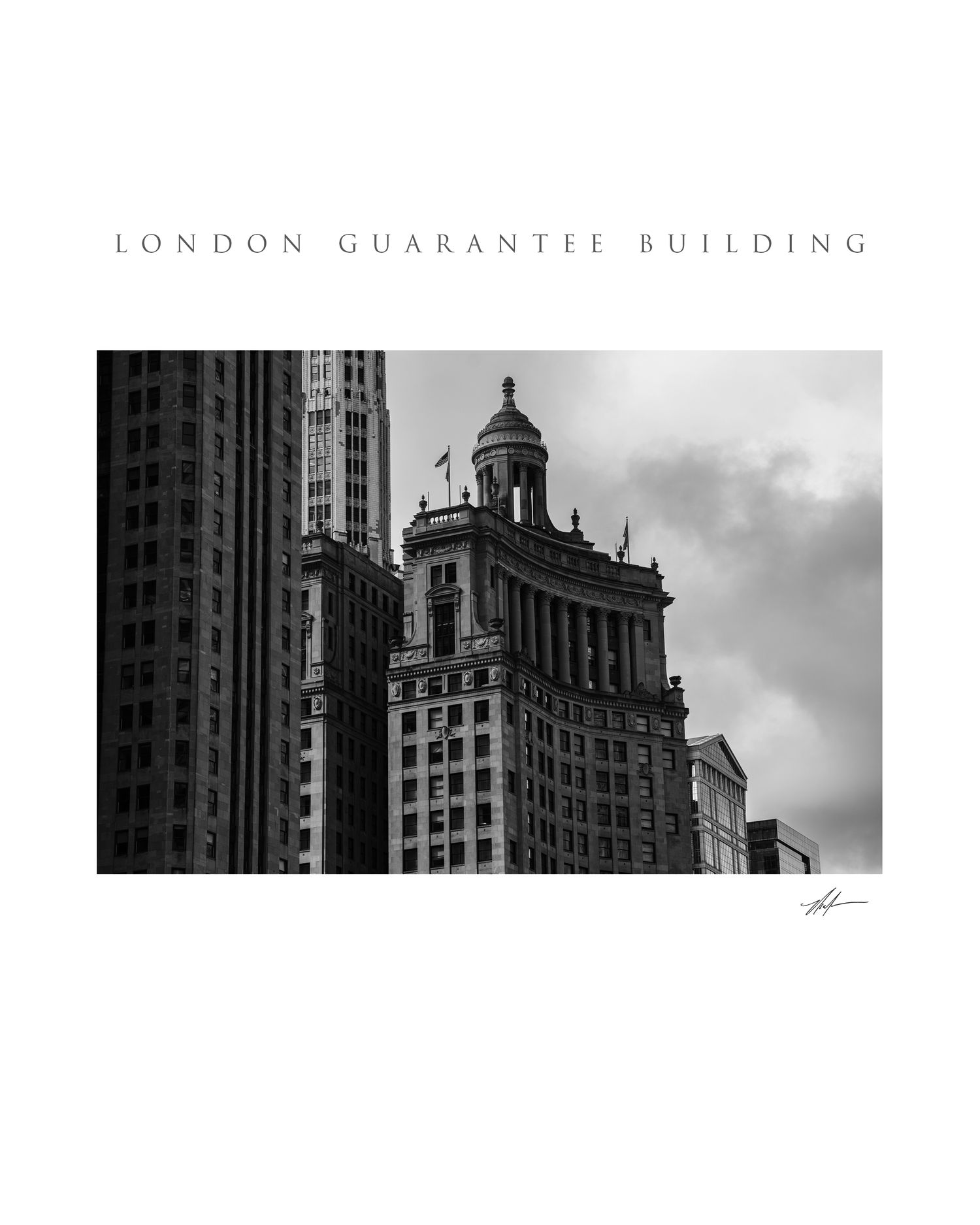
The London Guarantee Building
A Beaux-Arts jewel completed in 1923, the London Guarantee Building has lived many lives — from an insurance headquarters to a legendary jazz venue to the grand LondonHouse Hotel. Its Corinthian-crowned cupola remains one of the most elegant features of the riverfront. Chicago may build tall, but it never forgets beauty.
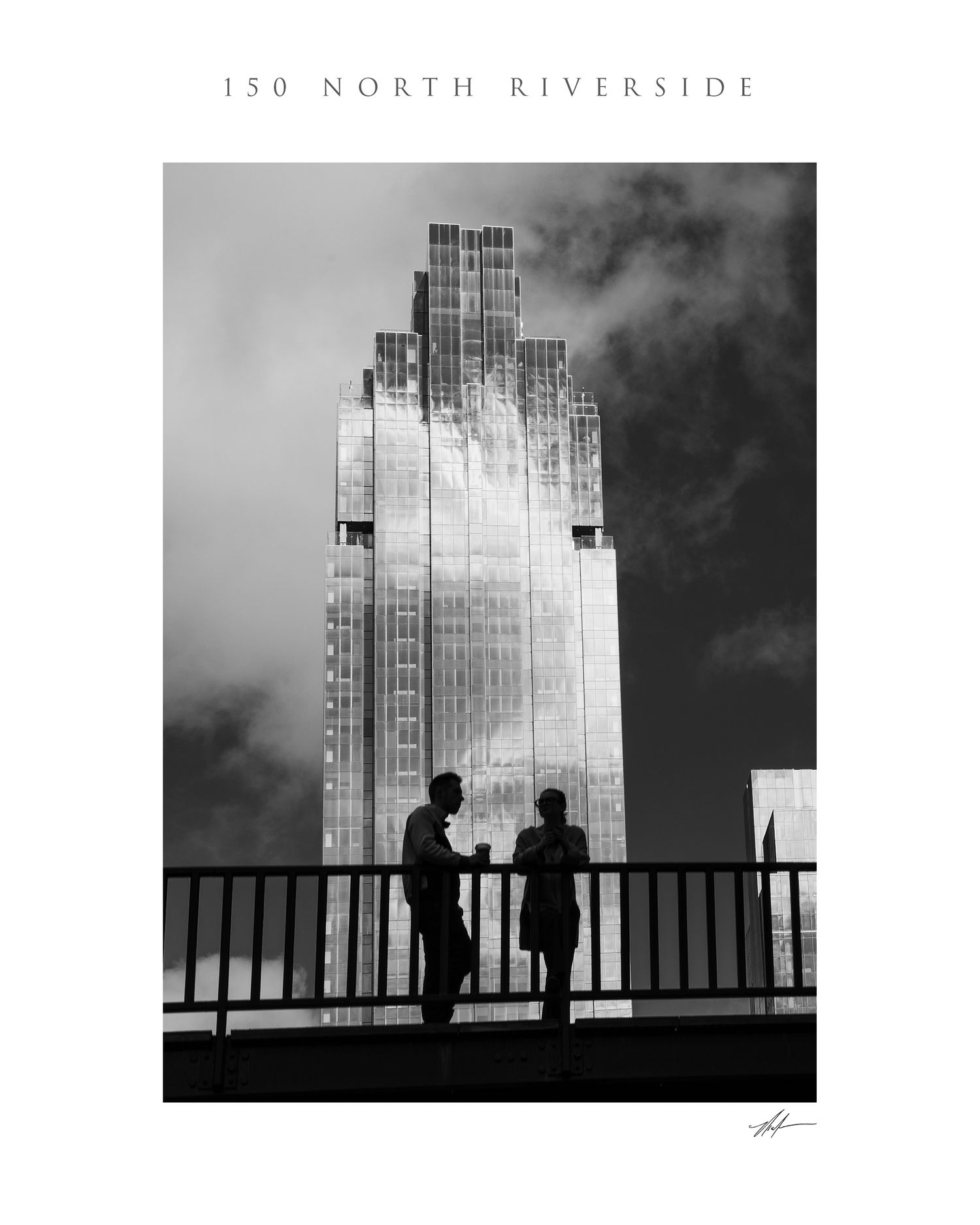
150 North Riverside
Few skyscrapers defy gravity quite like 150 North Riverside. With a footprint only 39 feet wide, it rises 730 feet thanks to ingenious structural engineering — a central core and massive transfer trusses allow the tower to flare outward as it climbs. Completed in 2017, it also delivered a new public riverwalk, blending architecture and community. Sometimes the boldest design comes from the tightest constraints.
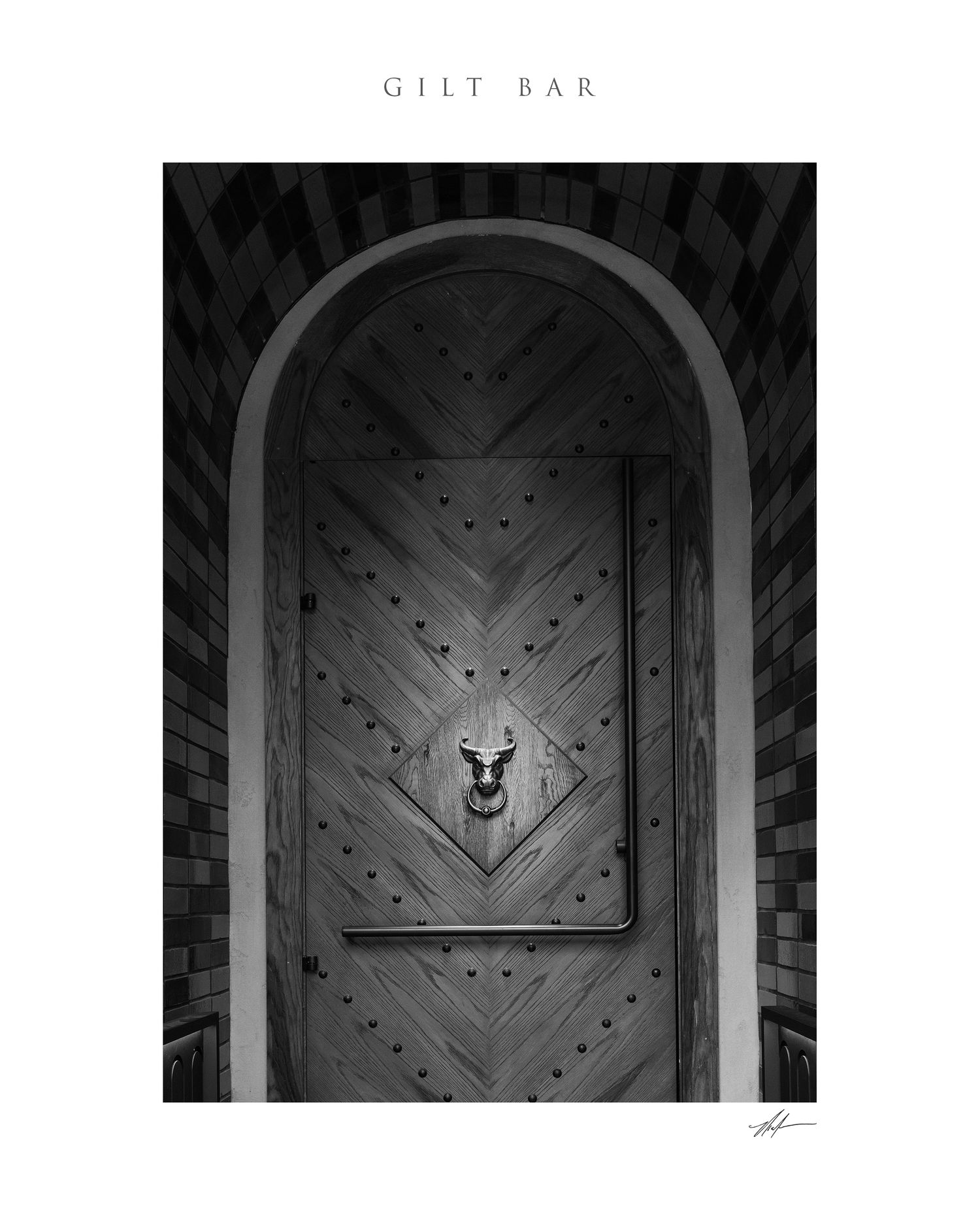
Gilt Bar
Not all Chicago icons scrape the sky. Some hide behind a bull’s-head door knocker. Gilt Bar, run by Hogsalt Hospitality, is a moody, velvet-lined haven of cocktails, dim light, and old-Chicago atmosphere. Proof that design lives everywhere — not just in steel and glass.
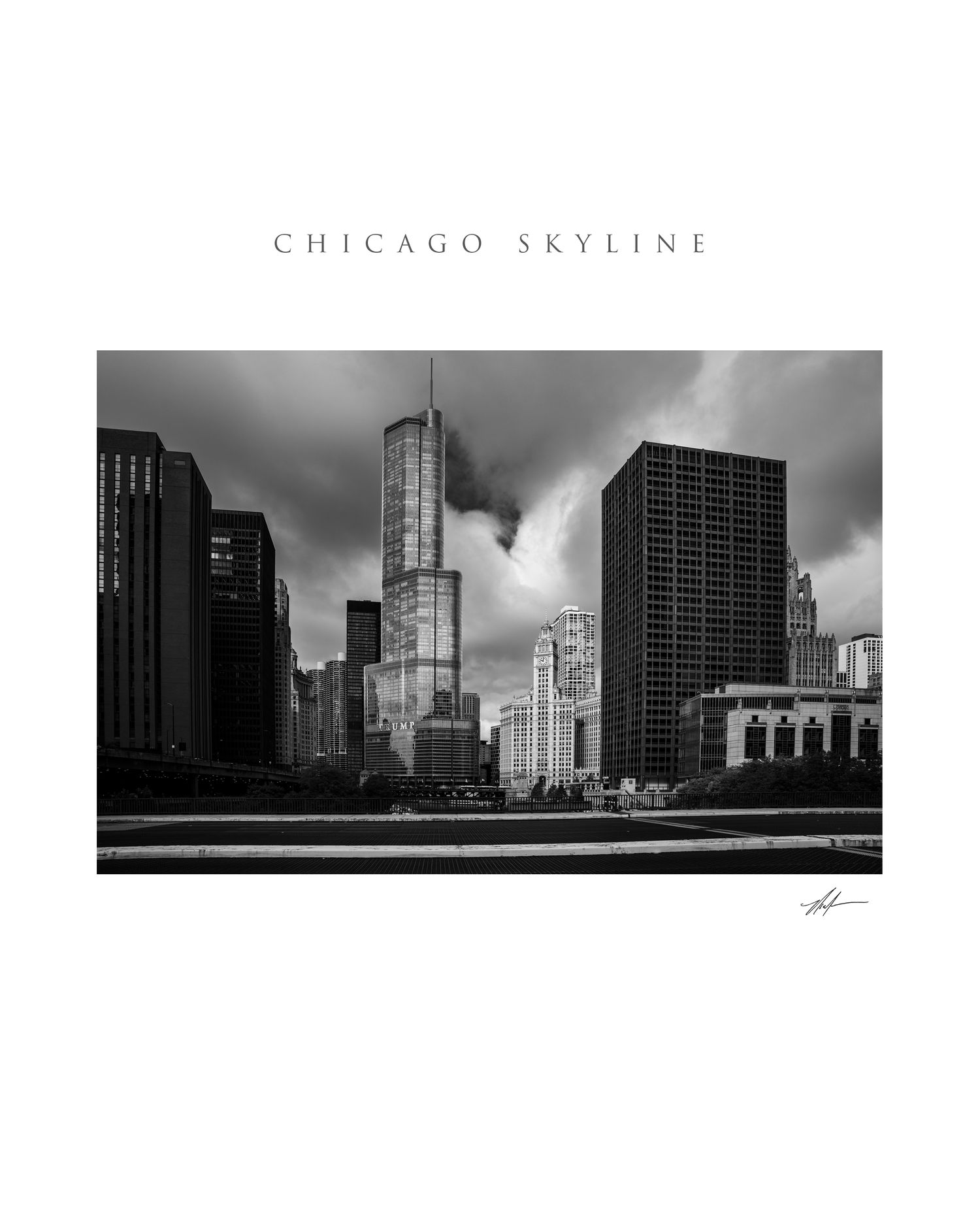
Chicago Skyline
The skyline itself is the city’s masterpiece — a mixture of eras, styles, ambitions, and stories. From Tribune Tower to the Wrigley Building, from mid-century grids to modern glass towers, Chicago’s legacy as the birthplace of the skyscraper shines through every reflection on the river. This city is alive with architecture.
